
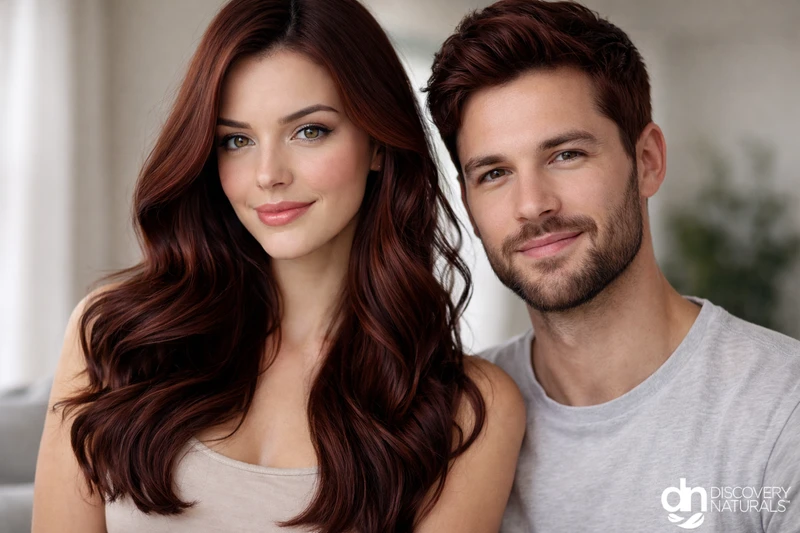
Dark red, wine red, chestnut, and mahogany hair dyes differ mainly by undertone and depth, and choosing the right one helps achieve natural-looking color without brassiness.
Chestnut, Mahogany & Natural Shades That Actually Last
Choosing the right hair color can feel overwhelming — especially when you’re deciding between dark red, wine red, chestnut, or mahogany brown shades. These colors live in a nuanced space where small differences in undertone can completely change the final result.
This guide was created to help you confidently choose the right shade, avoid common mistakes like brassiness or flat color, and understand what works best for men, women, and natural redheads using natural hair dye.
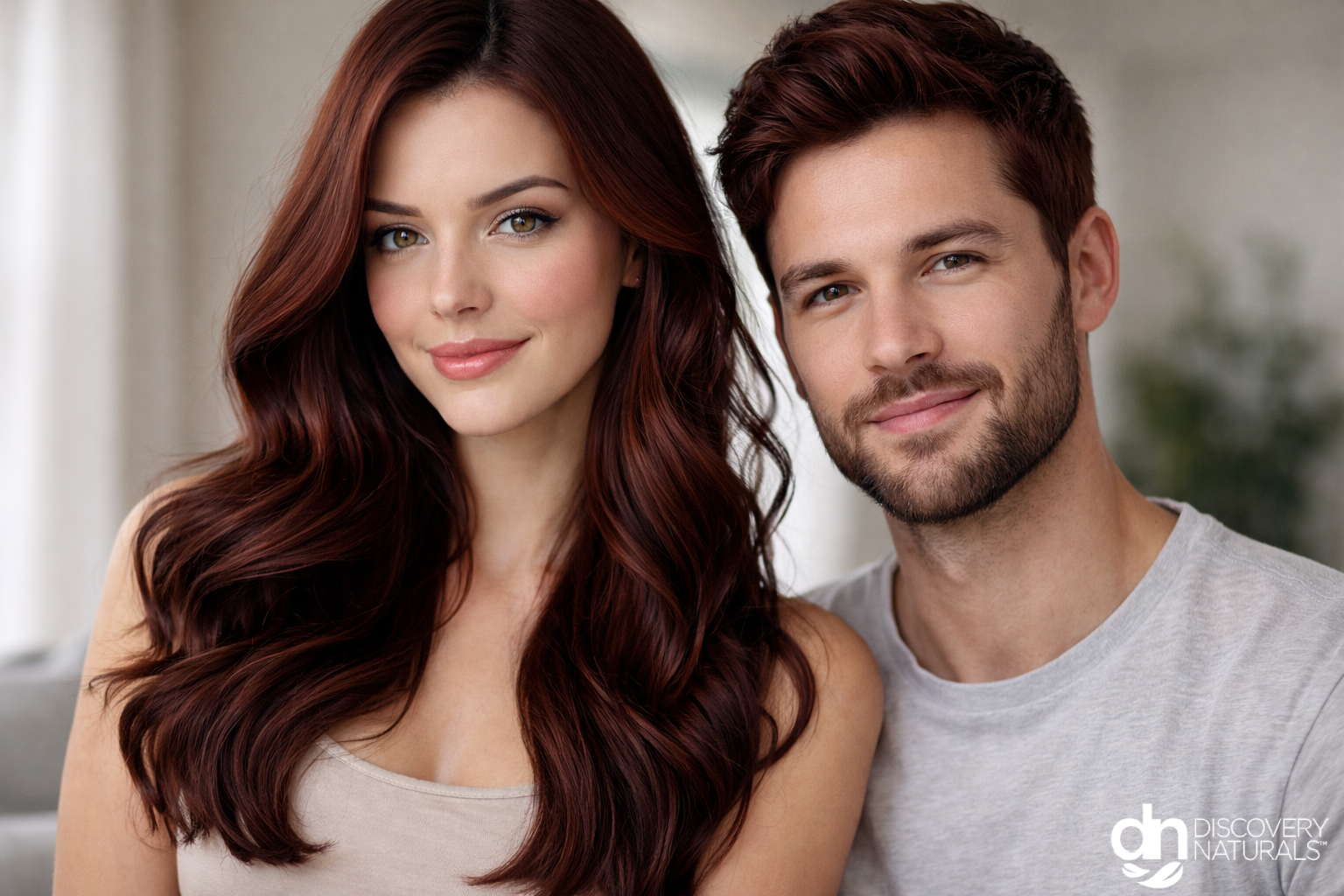
Dark Red Hair Dye vs Dark Wine Red Hair Color
Although these shades are often used interchangeably, dark red hair dye and dark wine red hair color behave very differently once applied.
Dark Red Hair Dye
Dark red shades tend to:
-
Lean warmer
-
Show copper or auburn tones in sunlight
-
Appear brighter as they fade
This shade works well for:
-
Natural brunettes
-
People who want visible red tones
-
Those comfortable with warmth and brightness
However, some people experience orange or brassy fade if timing runs too long or the base hair is too light.
Dark Wine Red Hair Color
Wine red is deeper, cooler, and more muted.
Characteristics include:
-
Burgundy or plum undertones
-
Rich depth indoors
-
Subtle red reflection in sunlight
Wine red is ideal if:
-
You’ve had brassy results in the past
-
You want red without brightness
-
You prefer a sophisticated, darker finish
Many people who “lose” wine red rankings actually land there after trying traditional red shades first.
Dark Red Brown Hair Color Dye: The Safest Middle Ground
One of the most searched — and most forgiving — shades is dark red brown hair color dye.
This color:
-
Looks brown at first glance
-
Reveals warmth only in certain lighting
-
Grows out naturally
-
Works exceptionally well for both men and women
Why dark red brown works so well
-
The brown base anchors the pigment
-
Red tones enhance depth instead of dominating
-
Fade is softer and more even
If you’re unsure whether to go red or brown, this is usually the best starting point.
Medium Chestnut Brown Hair Colour Explained
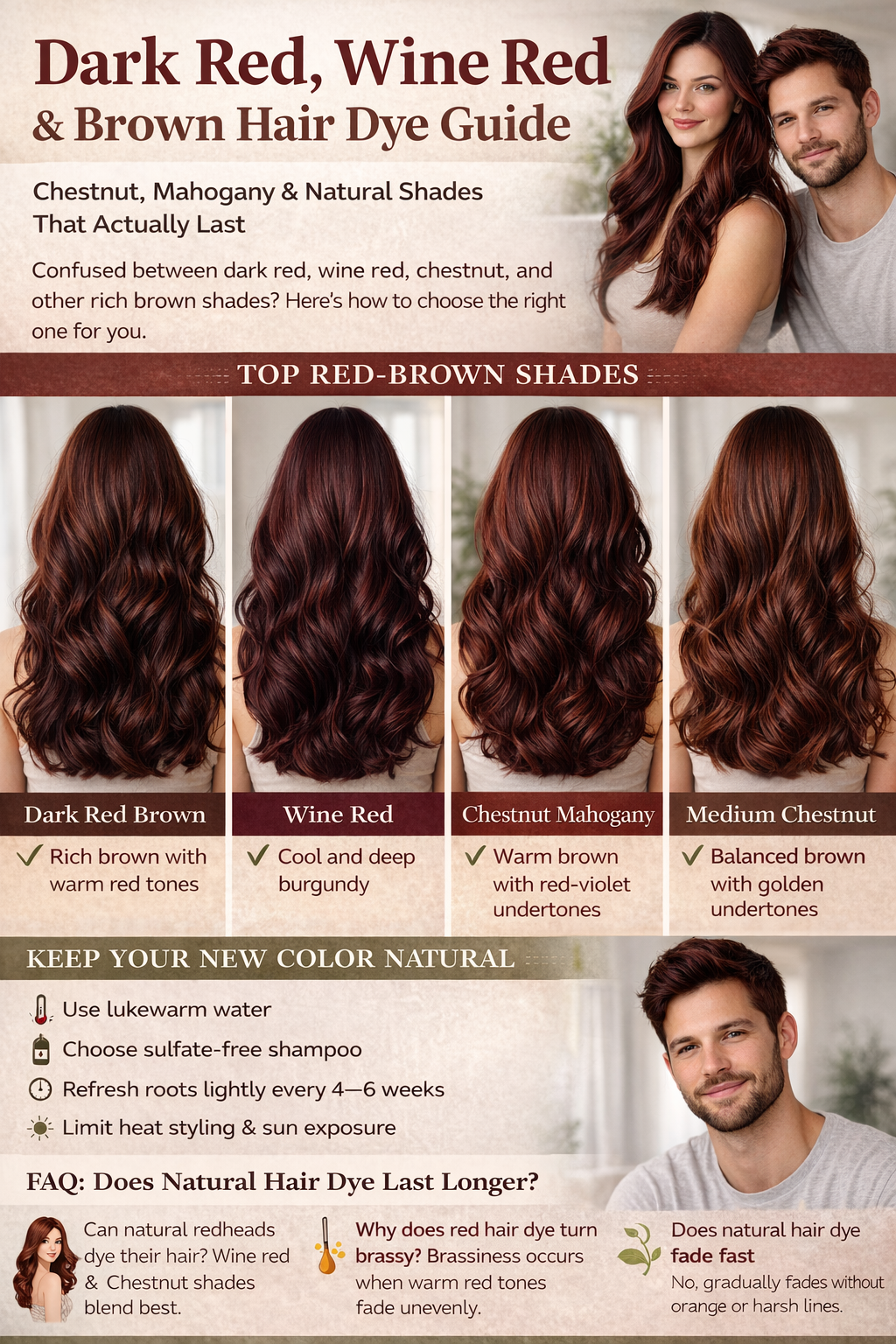
Medium chestnut brown hair color sits directly between cool brown and warm red.
What makes chestnut unique:
-
Balanced warmth
-
Soft golden undertones
-
Natural-looking depth
Chestnut is ideal for:
-
First-time color users
-
People covering early grays
-
Those who want warmth without obvious red
This shade consistently ranks well because it looks believable in everyday lighting.
Chestnut Mahogany Brown Hair Color: Richer, Deeper Results
Chestnut mahogany brown hair color introduces deeper red-violet undertones while still maintaining a brown base.
Best for:
-
Darker starting hair
-
Cooler skin tones
-
People wanting richness instead of brightness
Mahogany shades are especially popular in fall and winter when deeper tones feel more natural.

Brown Hair Dye for Men: What Looks Natural
Many men search for brown hair dye for men because they want subtle improvement — not a noticeable color change.
What men typically want
-
No visible red line at the hairline
-
No artificial shine
-
No sudden contrast with facial hair
Best brown shades for men
-
Medium chestnut brown
-
Dark red brown
-
Chestnut mahogany
Pro tip: Men usually achieve the most natural look by reducing processing time by 5–10 minutes.
Hair Dye Ideas for Guys That Don’t Look Dyed
When searching for hair dye ideas for guys, the goal is realism.
The most natural-looking results come from:
-
Staying close to your original color depth
-
Choosing warm brown blends over flat browns
-
Avoiding jet black or bright red tones
Subtle warmth mimics natural melanin and avoids the “shoe polish” effect.
Hair Dye for Natural Redheads
Natural redheads have unique pigment that reacts differently to dye.
If you’re choosing hair dye for natural redheads, keep these rules in mind:
-
Stay within one shade of your natural depth
-
Avoid overly dark browns
-
Choose wine red or soft mahogany for blending
Natural red pigment already exists in your hair — the goal is enhancement, not coverage.
Why Natural Hair Dye Holds Red & Brown Better
Red pigments fade faster than most colors — unless the dye binds properly.
Natural hair dyes:
-
Deposit pigment gradually
-
Fade evenly instead of brassy
-
Create softer regrowth lines
This is especially important for:
-
Dark red dye hair
-
Wine red shades
-
Chestnut and mahogany browns
The result is color that looks intentional longer.
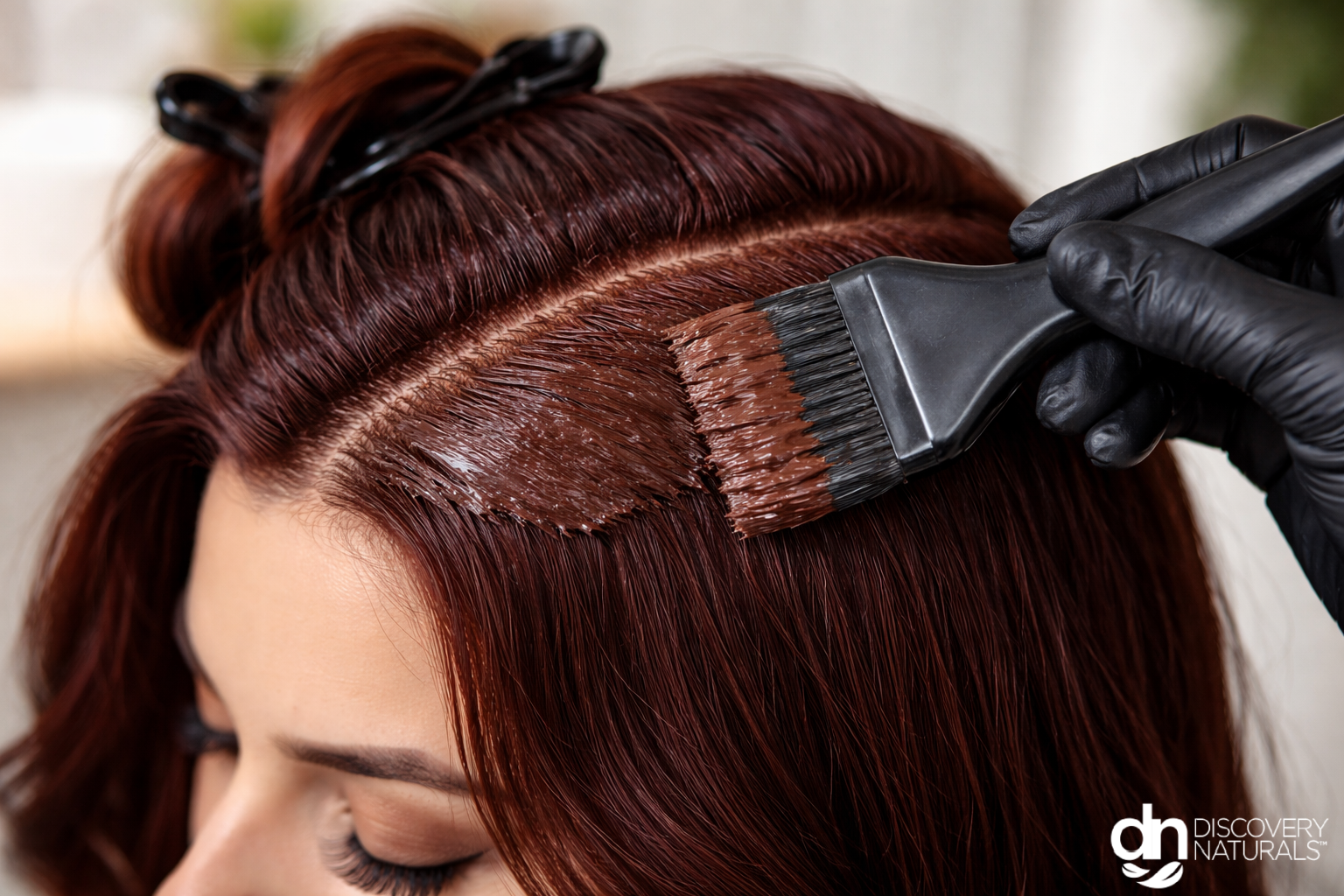
How to Maintain Dark Red & Brown Hair Dye
To extend color life:
-
Wash with lukewarm water
-
Avoid daily shampooing
-
Use sulfate-free products
-
Limit heat styling
Most people only need:
-
Root refresh every 4–6 weeks
-
Full-length refresh every 8–12 weeks
Choosing the Right Shade: Depth First, Warmth Second
A common mistake is choosing red first and depth second.
Instead:
-
Choose how dark you want to go
-
Add warmth after
Quick guide
-
Subtle & natural → Medium chestnut
-
Rich & deep → Mahogany brown
-
Warm but safe → Dark red brown
-
Deep red without orange → Wine red
FAQ: Dark Red & Brown Hair Dye
What is the difference between dark red and wine red hair dye?
Dark red hair dye leans warm and can appear coppery, while wine red hair color is deeper, cooler, and more burgundy-toned.
Is dark red brown hair color good for beginners?
Yes. Dark red brown hair color dye is one of the most forgiving shades and works well for first-time users.
What brown hair dye looks most natural on men?
Medium chestnut brown and dark red brown shades tend to look the most natural on men, especially when processing time is slightly reduced.
Can natural redheads dye their hair without losing warmth?
Yes. Wine red, soft mahogany, and chestnut shades enhance natural red pigment instead of covering it.
Does natural hair dye fade faster?
Natural hair dye fades more evenly, which often looks better over time than harsh synthetic dyes.
How often should I reapply dark red or brown hair dye?
Roots typically need refreshing every 4–6 weeks, while full applications can last up to 12 weeks.
Why does red hair dye turn brassy?
Brassiness occurs when warm pigments fade unevenly. Choosing deeper shades and avoiding over-processing helps prevent this.
Final Thoughts
Red and brown hair shades don’t need to feel risky. When you understand undertones, depth, and how natural dye behaves, the right choice becomes obvious.
If you want color that looks natural, fades gracefully, and complements your existing hair — depth always comes first.